AI Summary Alcohol-associated liver disease scores turn lab results into numbers that help doctors rate how severe alcohol-associated hepatitis is and whether treatment is working. The Maddrey DF and MELD score guide steroid decisions, while the Lille score checks response after 7 days. The Glasgow and ABIC scores estimate short-term risk. Scores add to, but do not replace, your exam and other tests. Stopping alcohol is the first step, and a transplant evaluation may follow if treatment fails.

Source: www.liverdirectory.com

Alcohol-Associated Liver Disease Scores

Medically Reviewed.

Alcohol-associated liver disease scores turn blood test results into numbers that help your care team judge how serious alcohol-associated hepatitis is and how your liver responds to treatment.

This page introduces the four scores in this group: the Maddrey Discriminant Function, the Lille score, the Glasgow Alcoholic Hepatitis Score, and the ABIC score.

Below, you will find key facts, a comparison of the scores, what a score can and cannot tell you, questions to bring to your visit, and answers to common questions.

AimyLiver Health AI Assistant
Ask about symptoms, tests, diet, or specialist care.
What does a FibroScan result mean?
I can explain the terms and help you prepare questions.
(opens in a new tab)

Ask Aimy

Turn confusion into a better next question.

Aimy answers from LiverDirectory’s reviewed health information — helping patients make sense of liver-health terms, prepare for specialist visits, and explore what to look up next.

By asking, you agree to the Terms & Conditions and Privacy Policy.

Alcoholic Hepatitis Scoring Basics

What Are Alcohol-Associated Liver Disease Scores?

Alcohol-associated liver disease (ALD), also called alcohol-related liver disease (ARLD) or alcoholic liver disease, describes liver damage caused by alcohol. It can occur with or without cirrhosis. Fatty liver, inflammation, and scarring can all appear before cirrhosis develops.

These scores matter most in alcohol-associated hepatitis (AH), also called alcoholic hepatitis. AH is inflammation of the liver linked to recent heavy drinking. Doctors suspect it when a person has sudden jaundice, a high bilirubin level, moderately raised liver enzymes (AST and ALT, usually under 400 IU/L), and an AST-to-ALT ratio above 1.5. AH is usually diagnosed from your alcohol history and lab results, so a liver biopsy is not routinely needed.

Once AH is likely, doctors use validated scores to rate how severe it is. Guidelines say these tools help find people at high risk of short-term death and guide treatment choices. Another score then checks whether treatment is working.

The group has four detailed guides: the Maddrey Discriminant Function, the Lille score, the Glasgow Alcoholic Hepatitis Score, and the ABIC score. Doctors also use the general MELD score, which has its own page.

Learn more about Alcohol-Associated Liver Disease

Key Facts About Alcohol-Associated Liver Disease Scores

  • Severity: Doctors rate severity in alcohol-associated hepatitis with validated scores, including the Maddrey Discriminant Function (DF) and the MELD score.
  • Steroid threshold: Corticosteroids are recommended for severe AH, typically a Maddrey DF of 32 or higher or a high MELD score, when there is no uncontrolled infection or gastrointestinal bleeding.
  • Response check: The Lille score is typically calculated after 7 days of steroid treatment. A score of 0.45 or higher is treated as non-response, and steroids should stop.
  • Transplant: Liver transplant shows a survival benefit in ALD with a MELD score of 15 or higher or Child-Pugh C status, with one-year survival of 80% to 85%.
  • First step: Stopping all alcohol is the first step in treating ALD.

Score Comparison at a Glance

How the Scores Compare

Each score answers a different question. Your care team may use more than one.

ScoreQuestion It Helps AnswerWhen It Is UsedKey Number in Guidelines
Maddrey Discriminant Function (MDF)How severe is the alcohol-associated hepatitis?When AH is diagnosed, to help decide on steroids32 or higher is typically called severe
Lille scoreIs steroid treatment working?After 7 days of steroids0.45 or higher means non-response
MELD scoreHow high is the short-term risk, and how urgent is a transplant evaluation?At diagnosis and during follow-up15 or higher: transplant survival benefit in ALD
Glasgow Alcoholic Hepatitis Score (GAHS)What is the short-term outlook in AH?During assessment of AHSee the GAHS guide
ABIC scoreWhat is the short-term outlook in AH?During assessment of AHSee the ABIC guide

Your team interprets your score alongside your exam, history, and other tests.

Four Severity and Response Scores

Types of Alcohol-Associated Liver Disease Scores
Maddrey Discriminant Function (MDF)

The Maddrey DF combines prothrombin time and bilirubin into one number that rates how severe alcohol-associated hepatitis is. A value of 32 or higher has long been used to find people at higher risk of death and to decide who may benefit from steroids.

Lille Score

The Lille score checks how your body responds to steroid treatment. Doctors typically calculate it after 7 days. A high score (0.45 or higher) means the treatment is not helping, and steroids should stop to avoid needless risks. It can also point toward an early transplant evaluation.

Glasgow Alcoholic Hepatitis Score (GAHS)

The GAHS is one of the prognostic scores doctors can use to estimate short-term risk in alcohol-associated hepatitis. Its guide explains how it works and how it fits with the other scores.

ABIC Score

The ABIC score is another prognostic score for alcohol-associated hepatitis. Its guide explains what it measures and how your team may use it next to the Maddrey DF and MELD.

Support your diet alongside your care

Amsety Bars were designed for people with liver conditions by liver health experts. They offer a convenient way to add energy and nutrients to a liver-friendly diet. Ask your provider what fits your needs.

Explore Liver Health Nutrition Bars
Amsety Bar in Dark Chocolate and Peanut Butter flavors

Interpreting Your Score Results

What Your Score Can and Cannot Tell You

What a Score Can Tell You

A score helps your team judge how sick the liver is and which treatments are safe to try. For example, steroids are recommended for severe AH, typically a Maddrey DF of 32 or higher or a high MELD, unless there is uncontrolled infection or gastrointestinal bleeding.

What a Score Cannot Tell You

A score is one number from one moment. It does not replace your exam, history, or other tests. Steroids do not reverse cirrhosis and do not help in mild disease. They raise the risk of infection, gastrointestinal bleeding, and metabolic problems, so your team weighs benefit against harm.

Why Stopping Alcohol Matters More Than Any Score

Stopping all alcohol is the first step in treating alcohol-associated liver disease, and no treatment can prevent further damage without it. If you drink heavily, talk with your doctor about medical oversight when you stop. Medicines, counseling, and support programs can help. Early stages such as fatty liver and alcoholic hepatitis can often be reversed through abstinence.

Find a Liver Specialist Near You

Liver Health Coach
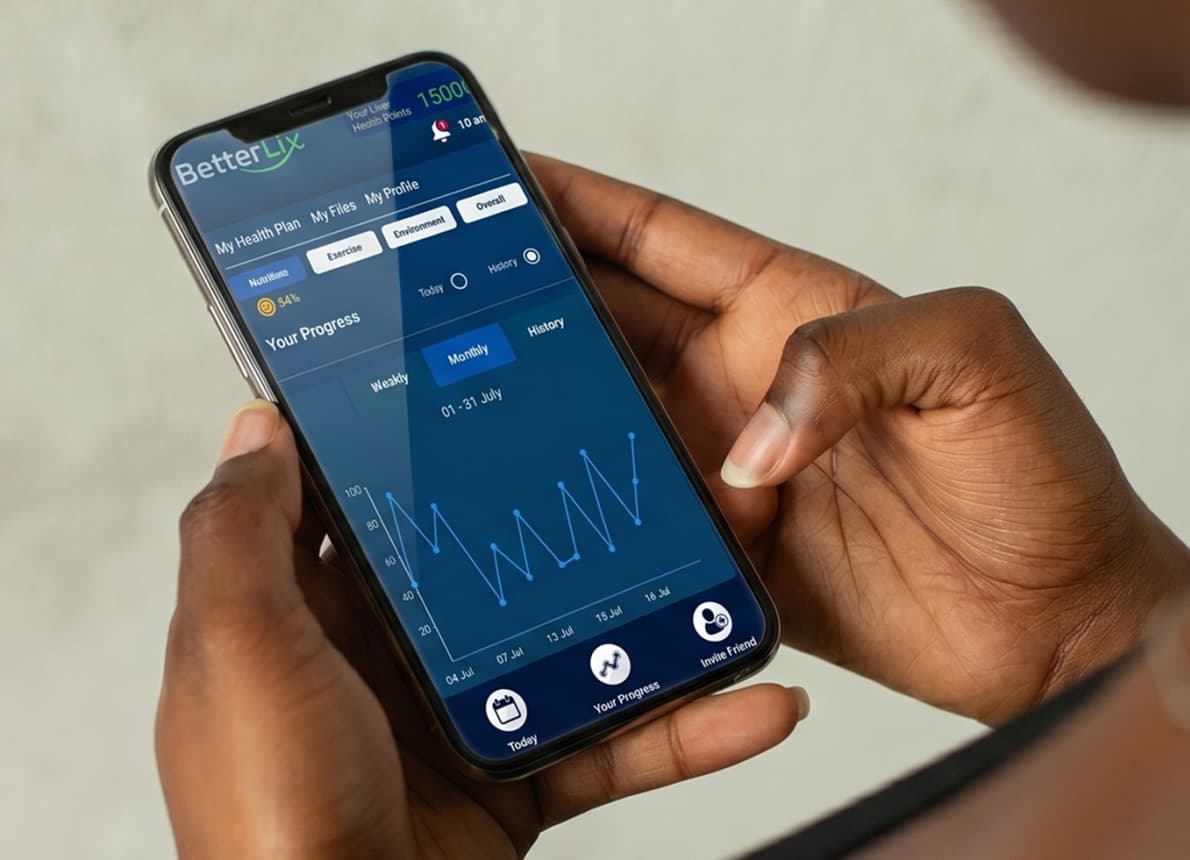
BetterLix app dashboard on a mobile phone

From Amsety

Support Your Liver Health With BetterLix

BetterLix was developed by Amsety to address the growing liver health crisis in the United States.

  • Liver symptom tracking and monitoring
  • Daily liver health habit guidance
  • Educational insights about liver conditions
  • Progress tracking for liver wellness

Common Questions

Answers to Common Alcohol-Associated Liver Disease Scores Questions

What Is the Maddrey Discriminant Function?

The Maddrey Discriminant Function (DF) is a score that combines prothrombin time and bilirubin to rate how severe alcohol-associated hepatitis is. Higher values have been linked to higher short-term risk of death, and a value of 32 or higher has been used to find people who may benefit from steroids.

What Does a High Lille Score Mean?

A Lille score of 0.45 or higher means steroids are not working. Doctors typically calculate the score after 7 days of treatment. In that case, guidelines advise stopping steroids to avoid unnecessary risks, and your team may discuss other options, including an early transplant evaluation in selected people.

Do I Need a Liver Biopsy to Diagnose Alcohol-Associated Hepatitis?

Usually not. Alcohol-associated hepatitis is typically diagnosed from your alcohol history and lab results. Doctors suspect it when you have recent heavy drinking, sudden jaundice, high bilirubin, and an AST-to-ALT ratio above 1.5. Imaging or a biopsy may be added in some cases.

Can Alcohol-Associated Liver Disease Be Reversed?

Often, in the early stages. Fatty liver and alcoholic hepatitis can often be reversed by stopping alcohol and keeping a healthy lifestyle. Cirrhosis, once it develops, is irreversible. Without abstinence, no medical treatment can prevent further damage.

Is the MELD Score Used for Alcohol-Associated Liver Disease Too?

Yes. Severity is assessed with validated prognostic scores, including the Maddrey DF and the MELD score. The MELD score uses bilirubin, INR, and creatinine, and transplant teams also use it to decide how urgently someone needs a transplant.

Medical disclaimer: LiverDirectory provides educational information and a directory of providers. It does not provide medical advice, diagnosis, or treatment. Always consult a licensed physician regarding any medical condition.