AI Summary: Tumor marker blood tests measure AFP, AFP-L3, and DCP (PIVKA-II), substances that can rise when liver cancer is present. Doctors use them with a liver ultrasound, about every six months for people with cirrhosis, to watch for early cancer. A high result is a reason for closer imaging or a biopsy, not a diagnosis, and a normal result does not rule out cancer. Report new symptoms, and ask your doctor which tests and schedule fit you.
Source: www.liverdirectory.com
Tumor Marker Blood Tests
Medically Reviewed.
Tumor marker blood tests measure substances that can rise in the blood when liver cancer is present. Doctors use them to watch for hepatocellular carcinoma (HCC), the most common type of liver cancer, in people with cirrhosis and other high-risk liver conditions.
These tests are a clue, not a diagnosis. Guidelines pair them with a liver ultrasound, and doctors confirm cancer with imaging or a biopsy.
This page explains the three main tumor markers, how often doctors check them, what a high result can mean, and what to do next.
Aimy answers from LiverDirectory’s reviewed health information — helping patients make sense of liver-health terms, prepare for specialist visits, and explore what to look up next.
A tumor marker is a substance in the blood that can rise when a tumor is present. For liver cancer, doctors measure three markers: alpha-fetoprotein (AFP), AFP-L3, and des-gamma-carboxy prothrombin (DCP, also called PIVKA-II).
A marker cannot confirm cancer on its own. AASLD advises against using AFP alone to diagnose liver cancer. Your care team reads each result together with your imaging, your risk factors, and your symptoms.
Why Doctors Use These Tests
Key Points
Early liver cancer often causes no symptoms, so people at high risk are tested on a schedule.
AASLD and APASL guidance pairs a liver ultrasound with an AFP blood test about every six months for people with cirrhosis.
A high result is a reason to look closer, not a diagnosis.
Doctors confirm cancer with imaging or a biopsy.
Tests in This Group
Three Tumor Marker Blood Tests
Each test is a routine blood draw. Your doctor chooses which ones fit your situation.
AFP (Alpha-Fetoprotein)
AFP is the tumor marker used most often for liver cancer. AASLD and APASL guidance combines an AFP test with an ultrasound every six months in people with cirrhosis. One guideline summary says an AFP above 15 ng/mL should raise suspicion of cancer.
AFP-L3 is a second marker that APASL guidance names for people at very high risk, such as those who have already had liver cancer. Doctors may order it alongside AFP, DCP, or both.
DCP is the third marker named in APASL guidance for people at very high risk, such as those with a history of liver cancer. It is reported under two names, DCP and PIVKA-II.
Every 6 months: the standard surveillance plan for people with cirrhosis is a liver ultrasound, often paired with an AFP blood test.
Every 4 months: APASL guidance advises more frequent checks for people with a history of liver cancer who were cured of hepatitis C, using ultrasound plus AFP, AFP-L3, and/or DCP.
1% to 1.5% per year: APASL guidance gives this as the yearly rate of HCC in people with MAFLD-related cirrhosis. A cirrhosis poster cited by Amsety gives a broader range of about 1% to 8% per year, depending on the cause.
Above 15 ng/mL: one guideline summary says an AFP over this level should raise suspicion of cancer.
Not a diagnosis: AASLD advises against using AFP alone to diagnose HCC because its accuracy is too low.
How AFP, AFP-L3, and DCP Compare
A plain comparison of the three markers. Your doctor decides which to order.
Test
What It Measures
Where Guidelines Place It
AFP (alpha-fetoprotein)
A protein that can rise with liver cancer
Paired with ultrasound every 6 months in people with cirrhosis
AFP-L3
A form of AFP
Named by APASL for people at very high risk, such as past liver cancer, with checks about every 4 months
DCP / PIVKA-II
Des-gamma-carboxy prothrombin, an abnormal clotting protein
Named by APASL for people at very high risk, such as past liver cancer, with checks about every 4 months
EASL notes that adding AFP to ultrasound raises sensitivity for early HCC but lowers specificity, so more results need a second look. EASL also says serum markers other than AFP lack enough long-term data to replace ultrasound in routine screening.
Results
Understanding Your Tumor Marker Results
A Higher-Than-Usual Result
An AFP above 15 ng/mL should raise suspicion of cancer, according to one guideline summary. Labs may use different reference ranges, so read your result against the range printed on your report.
What a High Result Can Trigger
Guidelines treat a raised marker as a reason to look closer. It may lead to a repeat test, closer imaging, or a biopsy, especially when a nodule is unclear on imaging. The diagnosis itself rests on contrast-enhanced CT or MRI, read with LI-RADS criteria, or on biopsy.
A Normal Result
Markers do not catch every cancer. A normal result does not rule out HCC, which is one reason ultrasound stays part of surveillance. Tell your doctor about any new symptoms, even if your markers are normal.
Changes over Time
Trends matter. In APASL guidance, elevated AFP at the end of hepatitis C treatment is one lab sign of higher risk, along with low albumin and low platelets. Your doctor compares each result with your earlier ones.
Amsety Bars were designed for people with liver conditions by liver health experts. They offer a convenient way to add energy and nutrients to a liver-friendly diet. Ask your provider what fits your needs.
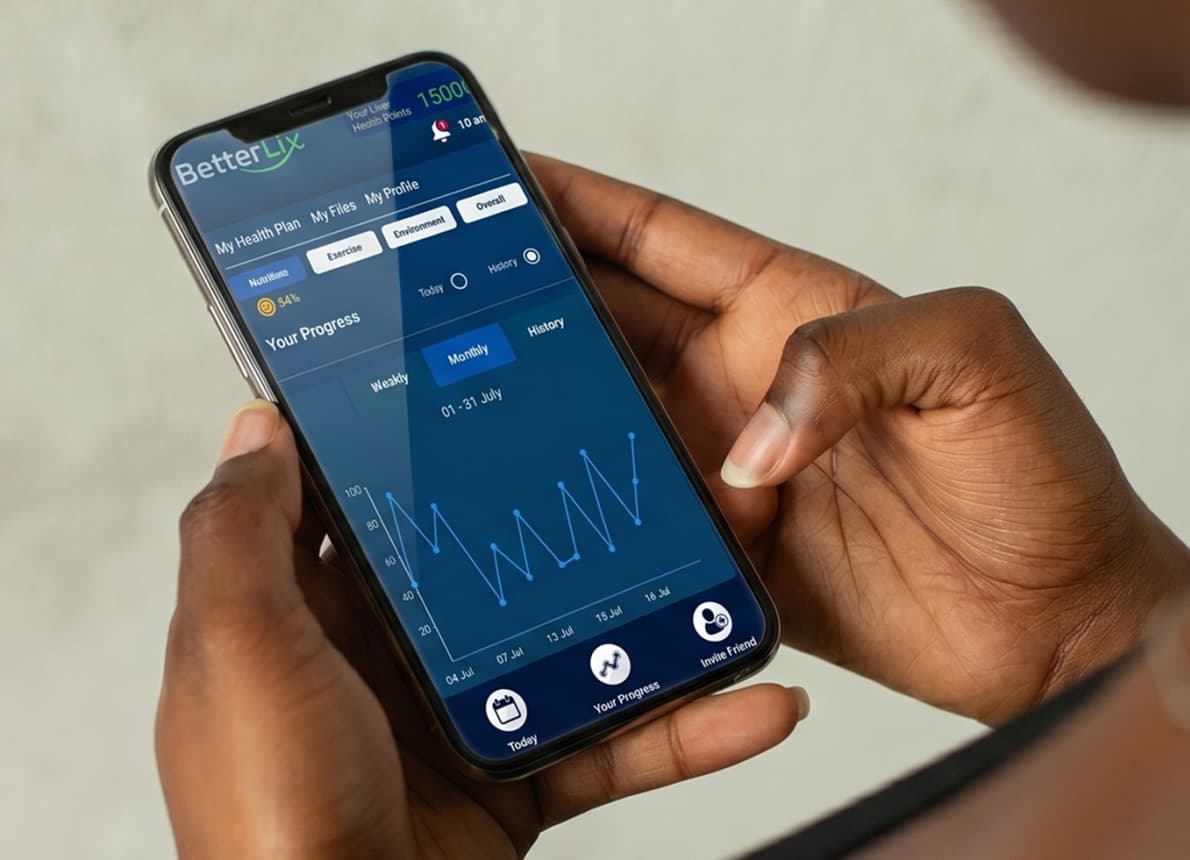
BetterLix is a digital liver health support app designed to help you understand liver conditions, track symptoms, and build healthier daily habits. It provides simple, personalized guidance to help you stay informed about your liver health and monitor progress over time.
Answers to Common Tumor Marker Blood Tests Questions
Does a high AFP mean I have liver cancer?
No. A high AFP is a reason for a closer look, not a diagnosis. AFP can also rise with other liver conditions, such as cirrhosis and hepatitis. AASLD advises against using AFP alone to diagnose liver cancer because its accuracy is too low. Doctors confirm the diagnosis with contrast-enhanced CT or MRI read with LI-RADS criteria. When imaging is unclear, or when you are not at high risk, they may use a biopsy.
Can liver cancer be present if my AFP is normal?
Yes. A normal marker does not rule out liver cancer, because markers do not catch every tumor. That is why guidelines pair the blood test with an ultrasound instead of relying on blood work alone. Tell your doctor about any new symptoms, such as yellow skin or eyes, upper right belly pain, or unexplained weight loss, whatever your results show.
What AFP level is considered high?
One guideline summary says an AFP above 15 ng/mL should raise suspicion of cancer. Reference ranges can differ by lab, so compare your result with the range printed on your report. A single number does not tell the whole story. Your doctor looks at it with your earlier results, your imaging, and your risk factors.
Can my AFP be high if I don't have cancer?
Yes. AFP is a protein the body makes naturally. It is higher during pregnancy and in infants, and liver conditions such as cirrhosis and hepatitis can also raise it. Liver cancer can raise it too, which is why doctors do not read it alone. If your result is high, ask your doctor what could explain it and whether you need more tests.
What happens if my tumor marker is high?
A high marker usually leads to more testing, not to an immediate diagnosis. Your doctor may repeat the blood test, order closer imaging, or recommend a biopsy, especially when a liver nodule looks unclear on imaging. AASLD notes that a raised AFP can prompt this closer evaluation and adds to your overall risk assessment. Ask your doctor what the next step is and who will contact you with the results.
Liver health updates
Stay Updated on Liver Health Insights
Get regular updates on liver diseases, symptoms, prevention tips, and new treatment insights delivered to your inbox.
Medical disclaimer: LiverDirectory provides educational information and a directory of providers. It does not provide medical advice, diagnosis, or treatment. Always consult a licensed physician regarding any medical condition.