
TSH (Thyroid-Stimulating Hormone)
Signals the thyroid to make more hormone. A high TSH usually means an underactive thyroid; a low TSH usually means an overactive thyroid.
AI Summary Thyroid tests (TSH, Free T4, Free T3, and Anti-TPO antibodies) measure hormones that set how your liver handles fats, sugars, and proteins; a typical TSH is 0.4–4.0 mIU/L, and ranges vary by lab. Doctors order them when fatigue, weight changes, or fluid retention could come from the thyroid or liver, and an underactive thyroid can contribute to fatty liver. Results are read alongside liver tests, not alone.
Source: www.liverdirectory.com
Medically Reviewed.
Thyroid hormones (T3 and T4) regulate how fast your body uses energy, including how your liver processes fats, sugars, and proteins. When thyroid levels are too low or too high, the liver can struggle to keep up, which is why doctors sometimes add thyroid testing alongside liver function tests.
This page covers the main thyroid blood tests — TSH, Free T3, and Free T4 — what their results mean, and when your liver care team might order them.

 Liver Health AI Assistant

Ask Aimy
Aimy answers from LiverDirectory’s reviewed health information — helping patients make sense of liver-health terms, prepare for specialist visits, and explore what to look up next.
Thyroid results do not diagnose liver disease on their own — your doctor interprets them alongside your liver function tests and symptoms. Lab ranges vary slightly, so compare your result to the range on your own report.
Why it matters
Thyroid hormones and liver function are closely linked. The thyroid helps set the pace for how the liver handles fats, sugars, cholesterol, and toxins, so a thyroid imbalance can show up as liver-like symptoms — and severe liver disease can, in turn, change thyroid hormone levels.
Signals the thyroid to make more hormone. A high TSH usually means an underactive thyroid; a low TSH usually means an overactive thyroid.
The main hormone the thyroid releases into the blood. Low Free T4 can point to hypothyroidism; high Free T4 can point to hyperthyroidism.
The active form of thyroid hormone your cells use. Its pattern alongside TSH and Free T4 helps confirm whether the thyroid is underactive or overactive.
Checks for autoimmune thyroid disease, such as Hashimoto's or Graves' disease. A high result means the immune system may be attacking the thyroid, which can also occur alongside autoimmune liver conditions.
An underactive thyroid can slow fat processing and contribute to fatty liver, while severe liver disease can lower T3 levels even when the thyroid itself is healthy (a pattern called non-thyroidal illness syndrome). This is why thyroid checks are often ordered together with liver monitoring.
Reference ranges
These are typical adult reference ranges. Your lab may use slightly different ranges — always compare your result to the range printed on your own report.
Thyroid-stimulating hormone tells the thyroid to make more hormone.
0.4–4.0 mIU/L
May suggest an underactive thyroid (hypothyroidism).
Typical range.
May suggest an overactive thyroid (hyperthyroidism).
The main hormone released by the thyroid; controls metabolism.
0.8–1.8 ng/dL
May suggest hypothyroidism.
Typical range.
May suggest hyperthyroidism.
The active form of thyroid hormone used by the body's cells.
2.3–4.2 pg/mL
May suggest hypothyroidism.
Typical range.
May suggest hyperthyroidism.
Checks for autoimmune thyroid disease.
Below 35 IU/mL
Not concerning.
Typical range.
May suggest autoimmune thyroiditis, such as Hashimoto's or Graves' disease.
One result is a snapshot. Your doctor looks at the pattern across TSH, Free T4, and Free T3 together, alongside your symptoms and liver test results, before drawing conclusions.
Amsety Bars were designed for people with liver conditions by liver health experts. They offer a convenient way to add energy and nutrients to a liver-friendly diet. Ask your provider what fits your needs.
Shop Liver Health Nutrition Bars
When testing is ordered
Thyroid symptoms can overlap with liver symptoms, so doctors often order thyroid testing to help sort out what is causing a patient's symptoms or to keep routine tabs on liver disease patients.
Fatigue, weight changes, mood shifts, or fluid retention can come from a thyroid problem, a liver problem, or both. Thyroid testing helps your doctor tell the difference.
If your liver test results and your symptoms do not line up, or if you have a diagnosed liver condition, your doctor may add thyroid testing to routine blood work to rule out a separate or contributing thyroid issue.
 Liver Health Coach
Liver health support
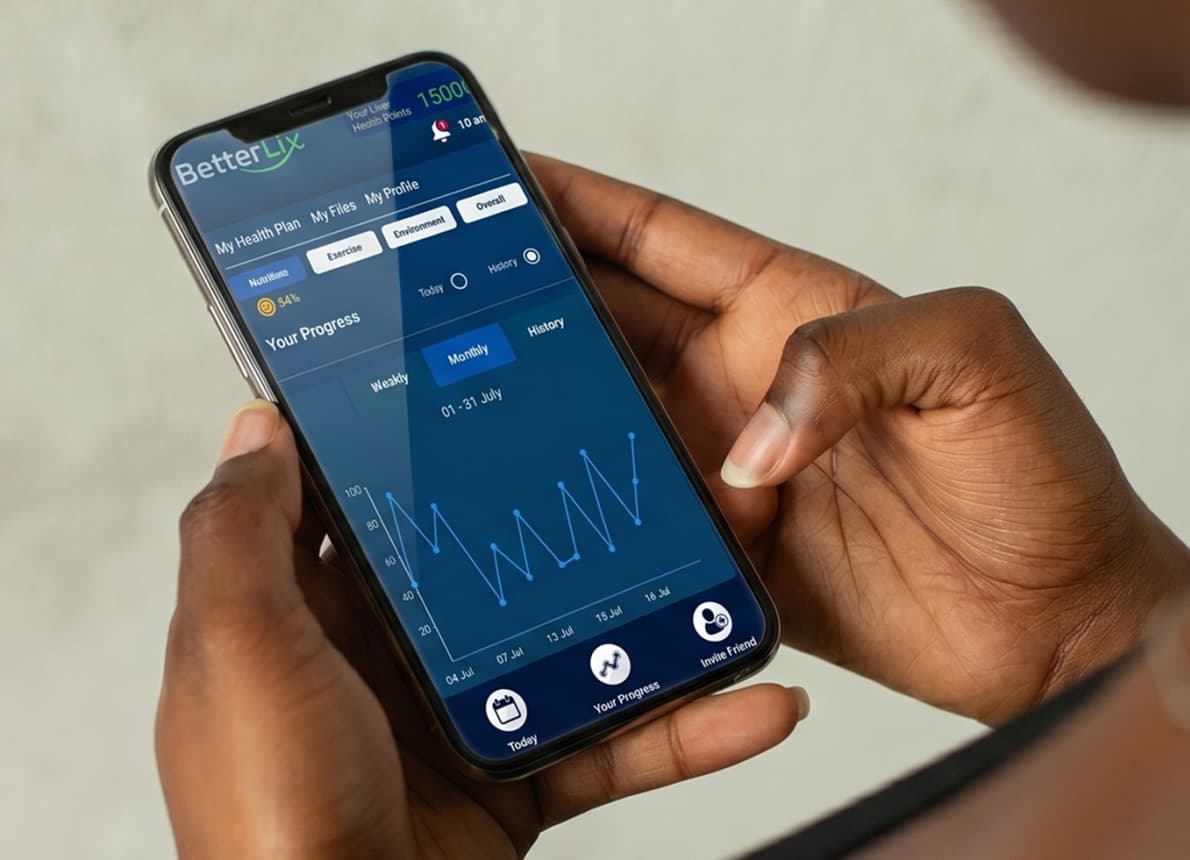
BetterLix is a digital liver health support app designed to help you understand liver conditions, track symptoms, and build healthier daily habits. It provides simple, personalized guidance to help you stay informed about your liver health and monitor progress over time.
COMMON QUESTIONS
Your doctor orders a thyroid test because thyroid hormones (T3 and T4) control metabolism, and metabolism directly affects your liver. These hormones help the liver process fats, sugars, and proteins, manage cholesterol, and detoxify the body. An underactive or overactive thyroid can cause fatigue, weight changes, or fluid retention. Liver disease can cause the same symptoms, so a thyroid test helps your doctor sort out the cause. It is also a common part of routine monitoring if you have liver disease, an autoimmune condition, or symptoms that do not match your liver tests. See "When Your Doctor May Order Thyroid Testing" above for more.
A high TSH usually points to an underactive thyroid (hypothyroidism). TSH (thyroid-stimulating hormone) is the signal that tells your thyroid to make hormones. A typical result falls between 0.4 and 4.0 mIU/L. A low TSH usually points to an overactive thyroid (hyperthyroidism). One number is only a snapshot, so your doctor reads TSH together with Free T4 and Free T3, your symptoms, and your liver tests. Your lab's range may differ slightly, so compare your result to the range on your own report. The "Thyroid Test Reference Ranges" section shows all four tests side by side.
Yes. When thyroid levels are low, liver metabolism slows. That can contribute to fat buildup in the liver and to higher cholesterol. An underactive thyroid is also listed among the conditions that raise the risk of fatty liver disease. This does not mean everyone with an underactive thyroid will develop fatty liver. It is one reason your doctor may add thyroid testing when evaluating fatty liver. The section "How the Thyroid and Liver Affect Each Other" explains the link in more detail.
Yes. In advanced liver disease, a pattern called non-thyroidal illness syndrome (also called sick euthyroid syndrome) can occur. It typically shows low T3, normal or low T4, and no disease of the thyroid gland itself. Heavy alcohol use can also lower thyroid hormone levels, especially T3. Because of this, your doctor does not read thyroid results alone. They factor in your liver condition, which is why thyroid checks are often ordered together with liver monitoring.
Ask your doctor before your blood draw, because the answer depends on which tests are drawn at the same visit. Fasting (not eating or drinking) may be needed if other tests, such as liver or metabolic panels, are done at the same time. Tell your provider about all the medicines you take, since many medicines can interfere with blood test results. Do not stop or change a medicine unless your provider tells you to. If you fast, you may feel dizzy or light-headed during or after the draw. Tell the clinician right away if that happens.
Medical disclaimer: LiverDirectory provides educational information and a directory of providers. It does not provide medical advice, diagnosis, or treatment. Always consult a licensed physician regarding any medical condition.

