AI Summary A liver biopsy takes a small tissue sample so a laboratory can help find the cause of liver disease, stage the damage, and guide or track treatment. Doctors reach the liver through the skin (percutaneous), a neck vein (transjugular), or a small abdominal cut with a camera (laparoscopic). Most people feel pressure and a dull ache, and results usually take about a week. Serious complications, such as bleeding, are uncommon. Noninvasive tests may reduce the need for biopsy.

Source: www.liverdirectory.com

Liver Biopsy

Medically Reviewed.

A liver biopsy removes a very small piece of liver tissue so a pathologist can study it under a microscope. It can show what is harming the liver and how far the damage has gone.

This page explains why doctors order the test and compares the three ways to do it: percutaneous, transjugular, and laparoscopic. Each has its own detailed guide.

Below, you will also find what to expect before, during, and after the procedure, the possible risks, and answers to common questions.

AimyLiver Health AI Assistant
Ask about symptoms, tests, diet, or specialist care.
What does a FibroScan result mean?
I can explain the terms and help you prepare questions.
(opens in a new tab)

Ask Aimy

Turn confusion into a better next question.

Aimy answers from LiverDirectory’s reviewed health information — helping patients make sense of liver-health terms, prepare for specialist visits, and explore what to look up next.

By asking, you agree to the Terms & Conditions and Privacy Policy.

Definition and basics

What Is a Liver Biopsy?

A liver biopsy is a test that collects a small sample of liver tissue. A laboratory then examines the tissue to help your doctor find out whether you have liver disease, what is causing it, and how advanced it is. Doctors also use it to monitor known liver disease and to see whether a treatment is working.

The test is invasive, which means an instrument enters your body. A doctor usually does it in a hospital or outpatient procedure unit.

There are three main ways to take the sample. The doctor can pass a needle through the skin (percutaneous), reach the liver through a vein in the neck (transjugular), or use a thin camera tube placed through a small cut in the abdomen (laparoscopic). Your care team picks the route that is safest for you.

A biopsy is one part of a liver workup. Your doctor will usually weigh it alongside blood tests, imaging, and your symptoms.


Key Facts About Liver Biopsy

  • Purpose: Liver biopsy helps diagnose the cause of liver disease, stage its severity, and guide treatment decisions.
  • Sample: For most diffuse liver diseases, guidelines recommend a sample at least 2 to 3 centimeters long, taken with a 16-gauge needle.
  • Routes: Doctors use the percutaneous route (through the skin), the transjugular route (through a neck vein), or a laparoscopic approach.
  • Time: The needle part of a percutaneous biopsy takes only seconds. The full procedure takes about 20 minutes, followed by a few hours of rest in bed.
  • Results: Results are usually ready within about a week, depending on the clinic.
  • Ride home: You need someone to drive you home, and you should not drive or use heavy machinery for 8 hours afterward.

Diagnosis, staging, and monitoring

Why Doctors Order a Liver Biopsy

Your doctor may suggest a biopsy when other tests do not give a clear answer.

To Find the Cause of Liver Problems

Blood tests may show abnormal liver enzymes, or an ultrasound, CT scan, or X-ray may show a problem in the liver. Jaundice and other symptoms of liver disease can also lead to a biopsy. The tissue can help explain swelling of the liver or abnormal enzyme levels, and it can detect cancer and infections.

To Stage the Disease

A biopsy shows how much damage the liver has. This matters most in [hepatitis B](/liver-diseases/viral-hepatitis/hepatitis-b) and [hepatitis C](/liver-diseases/viral-hepatitis/hepatitis-c), where the stage helps shape care. In fatty liver disease, biopsy can confirm MASH (also called NASH) and stage fibrosis when noninvasive tests cannot settle the question.

To Guide and Track Treatment

The results can help your team choose a treatment. If you already have a diagnosis, a biopsy can also show whether a treatment is working.

To Sample a Specific Area

When doctors need tissue from one particular part of the liver, they may choose a laparoscopic biopsy, which lets them see the liver on a monitor while they take the sample.

Choosing a biopsy route

Percutaneous vs. Transjugular vs. Laparoscopic Biopsy

All three methods collect liver tissue. They differ in how the doctor reaches the liver.

MethodHow the sample is takenWhen doctors may choose it
PercutaneousA needle passes through the skin on your right side, often guided by ultrasound, after the area is numbed.Most common route for people whose blood clots normally and who have no fluid buildup that makes it unsafe.
TransjugularA thin tube (catheter) enters a vein in your neck and is guided to the liver. A biopsy needle passes through it. X-rays guide the doctor.When the percutaneous route is not safe because of a clotting problem or ascites, or when the doctor also needs to measure pressure in the liver's blood vessels.
LaparoscopicA camera tube (laparoscope) enters through a small cut in the abdomen. The doctor watches a monitor and takes samples with small instruments.When the doctor needs tissue from a specific part of the liver.

Your care team decides the route based on your clotting tests, your other conditions, and what they need to learn.

Detailed biopsy guides

The Liver Biopsy Guides in This Group

Each type has its own page with more detail.

Percutaneous Biopsy

The needle goes through the skin of the right side of your abdomen. You hold your breath for five to ten seconds while the sample is taken. This guide covers how it works and what recovery looks like.

Transjugular Biopsy

The doctor reaches the liver through a vein in the neck. Guidelines say this route should be used when a percutaneous biopsy is unsafe because of clotting problems or ascites, or when portal pressure must be measured.

Laparoscopic Biopsy

A camera lets the doctor see the liver and target the area to sample. This guide explains when it is used and how it differs from a needle biopsy.

Procedure and recovery

What Happens Before, During, and After a Liver Biopsy

Details vary by route and by clinic. This is the general flow for a percutaneous biopsy. Your team will give you instructions that fit your situation.

Step by Step

  • Before: Your provider will tell you if you need to stop any medicines. Do not stop or change a medicine unless your provider tells you to. Bring a list of everything you take.
  • Setup: You lie on your back with your right hand above or under your head. A nurse places an IV line in your arm, and you may be offered a sedative to help you relax.
  • Marking the spot: The provider often uses ultrasound to find the right place on your side. The skin is cleaned and numbed.
  • Taking the sample: The provider makes a small cut and passes the needle into the liver. You hold your breath for five to ten seconds while the sample is taken. The needle itself is in for only a few seconds.
  • Right after: Pressure is applied and a bandage goes on. You rest in bed for a few hours so staff can watch for problems.
  • Going home: Someone must drive you home. Do not drive or use heavy machinery for 8 hours.
  • Results: A laboratory examines the tissue. Results are usually ready within about a week, depending on the clinic.

You may feel pressure and a dull ache during a percutaneous biopsy, and the area can be sore afterward.

Support Your Diet Alongside Your Care

Amsety Bars were designed for people with liver conditions by liver health experts. They offer a convenient way to add energy and nutrients to a liver-friendly diet. Ask your provider what fits your needs.

Explore Liver Health Nutrition Bars
Amsety Bar in Dark Chocolate and Peanut Butter flavors

Safety and warning signs

Liver Biopsy Risks and When to Call Your Doctor

Serious problems are uncommon, but you should know the warning signs.

Possible Complications

Minor effects include pain at the site and a brief drop in blood pressure. Major complications include bleeding inside the abdomen, inside the liver, or into the chest cavity (hemothorax). The liver can also leak bile.

Warning Signs After the Test

Call your doctor or go to the nearest emergency room if you have fever, chills, dizziness, or pain at the biopsy site within 72 hours.

When a Needle Biopsy May Not Be Safe

Biliary obstruction means the bile ducts are blocked. In that case, a biopsy carries a high risk of infection and inflammation in the abdomen (biliary peritonitis) and other serious problems, so doctors avoid it. Doctors also take extra care with clotting problems and ascites, which is fluid buildup in the abdomen. If a biopsy is still needed, a transjugular biopsy or an image-guided percutaneous biopsy after draining the fluid can be considered.

Find a Liver Specialist Near You

Noninvasive testing options

Liver Biopsy vs. Noninvasive Tests

Biopsy is not the only way to learn about your liver. Blood-based scores such as FIB-4 and stiffness scans such as FibroScan estimate scarring without a needle. They are widely available and easier on patients, and doctors use them more and more to reduce the need for biopsy.

Biopsy still has a role. It remains the gold standard for confirming MASH and staging fibrosis when noninvasive tests are inconclusive. Imaging alone does not replace it in every case.

Ask your doctor which test fits your situation and why. If fatty liver disease is the concern, see MASLD and MASH treatments.

Liver Health Coach
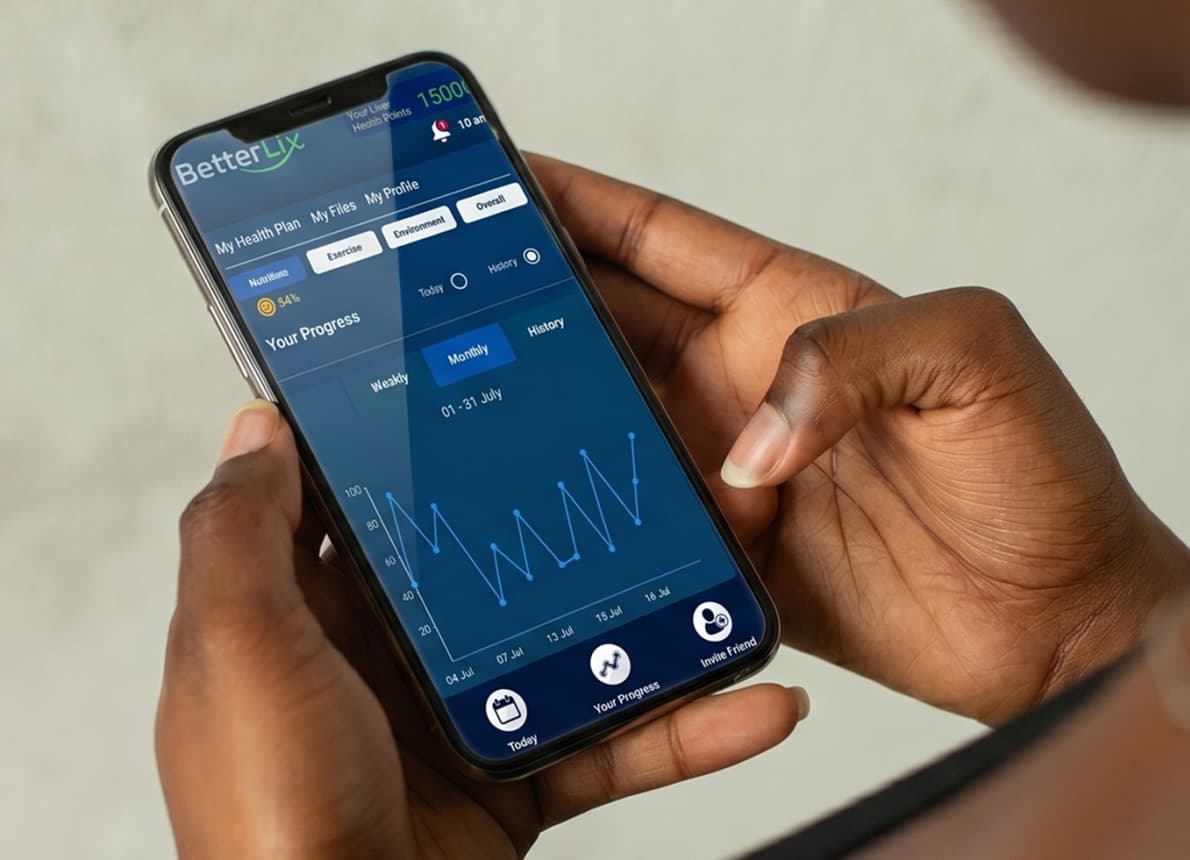
BetterLix app dashboard on a mobile phone

Liver health support

Support Your Liver Health Journey with BetterLix

BetterLix is a digital liver health support app designed to help you understand liver conditions, track symptoms, and build healthier daily habits. It provides simple, personalized guidance to help you stay informed about your liver health and monitor progress over time.

  • Liver symptom tracking and monitoring
  • Daily liver health habit guidance
  • Educational insights about liver conditions
  • Progress tracking for liver wellness

Common Questions

Answers to Common Liver Biopsy Questions

Does a liver biopsy hurt?

Most people feel pressure and a dull ache, not sharp pain. Before the sample is taken, the skin is cleaned and numbed, and you may be offered a sedative to help you relax. During a percutaneous biopsy, you hold your breath for five to ten seconds while the sample is taken, and the needle is in for only a few seconds. Afterward, the area can be sore. If you have pain at the biopsy site within 72 hours, call your doctor or go to the nearest emergency room.

Is a liver biopsy safe?

Serious complications are uncommon, but the test is invasive and does carry some risk. Minor effects include pain at the site and a brief drop in blood pressure. Major complications include bleeding inside the abdomen, inside the liver, or into the chest cavity, and the liver can also leak bile. Doctors avoid a biopsy when the bile ducts are blocked, and they take extra care with clotting problems and ascites (fluid buildup in the abdomen). Call your doctor or go to the nearest emergency room if you have fever, chills, dizziness, or pain at the biopsy site within 72 hours.

How long do liver biopsy results take?

Results are usually ready within about a week, depending on the clinic's turnaround time. During that time, a laboratory examines the tissue sample. The findings help your doctor work out whether you have liver disease, what is causing it, and how advanced it is. Ask your care team how and when they will share your results.

Does everyone with liver disease need a biopsy?

No. Doctors increasingly use noninvasive options, such as blood-based scores and stiffness scans (elastography), to estimate scarring without a needle. A biopsy is usually kept for times when those tests are unclear, or when tissue is needed to find the cause of liver disease. In fatty liver disease, for example, a biopsy can confirm MASH and stage fibrosis when noninvasive tests cannot settle the question. Your doctor will weigh your symptoms, blood tests, and imaging to decide which test fits you.

Why would my doctor choose a different type of biopsy?

Your doctor picks the route that is safest for you and best answers the medical question. The percutaneous route, with a needle through the skin, is the most common. The transjugular route, through a vein in the neck, may be chosen if a percutaneous biopsy is unsafe because of a clotting problem or ascites, or if the pressure in the liver's blood vessels must be measured. A laparoscopic biopsy lets the doctor see the liver on a monitor, so it may be used when tissue is needed from a specific area.

Medical disclaimer: LiverDirectory provides educational information and a directory of providers. It does not provide medical advice, diagnosis, or treatment. Always consult a licensed physician regarding any medical condition.